James Wilson's Pyramid of Government: The People's Road to the Bill of Rights, Emancipation, and the Ongoing "More Perfect Union"
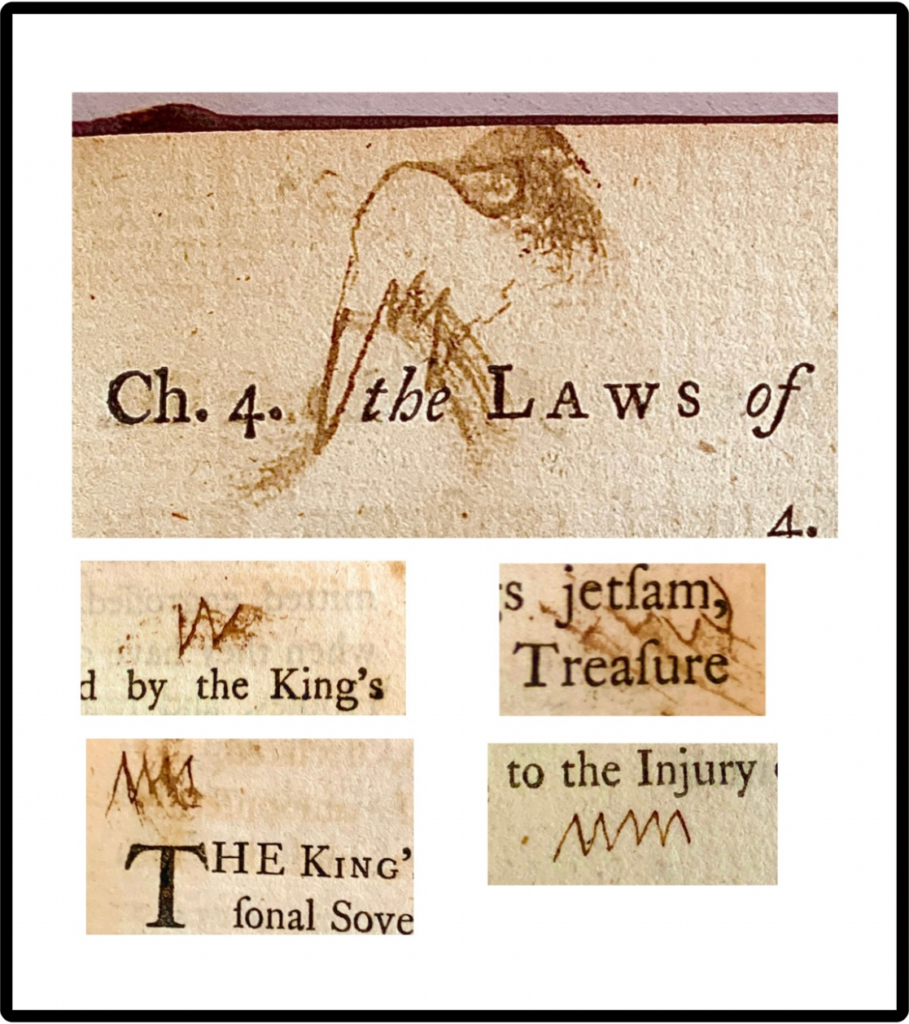
In the top diagram, Wilson drew a pyramid atop an ascending line, emanating from a sawtooth mark over the purposely selected word "the". Wilson used this sawtooth mark as a symbol of the People, consistently inserting the mark in Blackstone’s text near the word "King" or the King’s prerogative. This diagram illustrates Wilson’s Revolution Principle: The People are the foundation of society, from whom the government structure and authority arises - a structure and authority that can be altered or abolished by the will of the People.
Wilson laid out this Revolution Principle in his earlier tract, Considerations on the Nature and Extent of the Legislative Authority of the British Parliament, published in 1774. Two years later, Thomas Jefferson would borrow key phrases, almost verbatim, from Wilson’s tract while writing the Declaration of Independence. These borrowed phrases include the Declaration’s soaring statements about freedom, equality, the consent of the governed, and happiness.
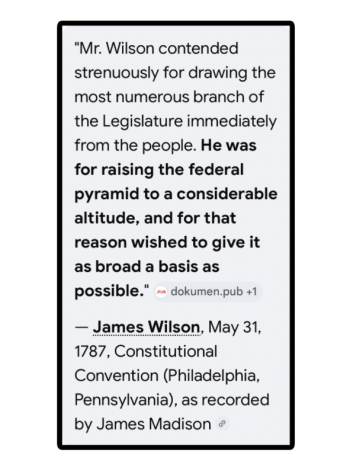
By steadily broadening the base of the People in Wilson’s pyramid, America has increasingly been able to live up to its creed, first foretold by Wilson when he wrote: "All men are, by nature, equal and free."